Story | 07/21/2026 10:57:02 | 5 min Read time

Climate planning shapes long-term forest management in Minnesota

At UPM Blandin, climate action is rooted in sustainable forest management certified under SFI across 76,000 hectares of semi-natural mixed forest. By balancing harvesting, regeneration, and forest tending, UPM Blandin is preserving its forestland and works to strengthen the forest’s resilience to a changing climate.

“Our practices provide a double benefit,” explains Sawyer Scherer, Land and Silviculture Manager at UPM Blandin. “We take actions that ensure reliable fibre for the UPM Blandin paper mill, while building resilience in the forest.” 

Annual temperatures in north central Minnesota, where UPM forestlands are located, have steadily risen over the past century and are expected to continue increasing. In response, Scherer began developing a climate adaptation plan to strengthen forest resilience and long-term health. 
 

Understanding carbon sinks and storage 

A carbon sink is any natural system, such as a forest, ocean, or soil, that absorbs more carbon dioxide (CO2) from the atmosphere than it releases. In other words, it “takes in” and reduces the amount of CO2 present in the air. 


Carbon source: The forest releases more carbon than it absorbs over that period. This happens when harvest, decay, disease, fire, or other losses outpace new growth. 


Carbon sequestration is the active process by which these sinks capture CO2, for example, trees absorbing carbon dioxide as they grow. 


Carbon storage refers to the way that absorbed carbon is kept within these sinks over time. For forests, this means that the carbon taken in by trees is stored in their trunks, branches, leaves, and roots, as well as in forest soils. This long-term storage keeps carbon out of the atmosphere for extended periods, contributing to broader climate change mitigation efforts. 


“Our foresters use a range of silvicultural practices to support forest growth and carbon storage,” says Scherer. “Some actions such as thinning may accelerate sequestration, while multi-aged methods are intended to promote increased storage over time. Combined, these methods are designed to promote the forest’s long-term capacity to sequester and store carbon.” 


UPM Blandin Smart ForestrySM methods:

  • Monitoring harvest levels to ensure long-term growth-to-harvest balance 
  • Thinning overcrowded stands to improve tree health and drought resistance 
  • Using multi-aged harvest systems to maintain structural diversity  
  • Planting and reforesting understocked areas 
  • Tracking biodiversity health through six key indicators 


Practical actions we take 

At UPM Blandin, several forestry practices are designed to strengthen carbon storage and climate resilience, starting with tree planting. 


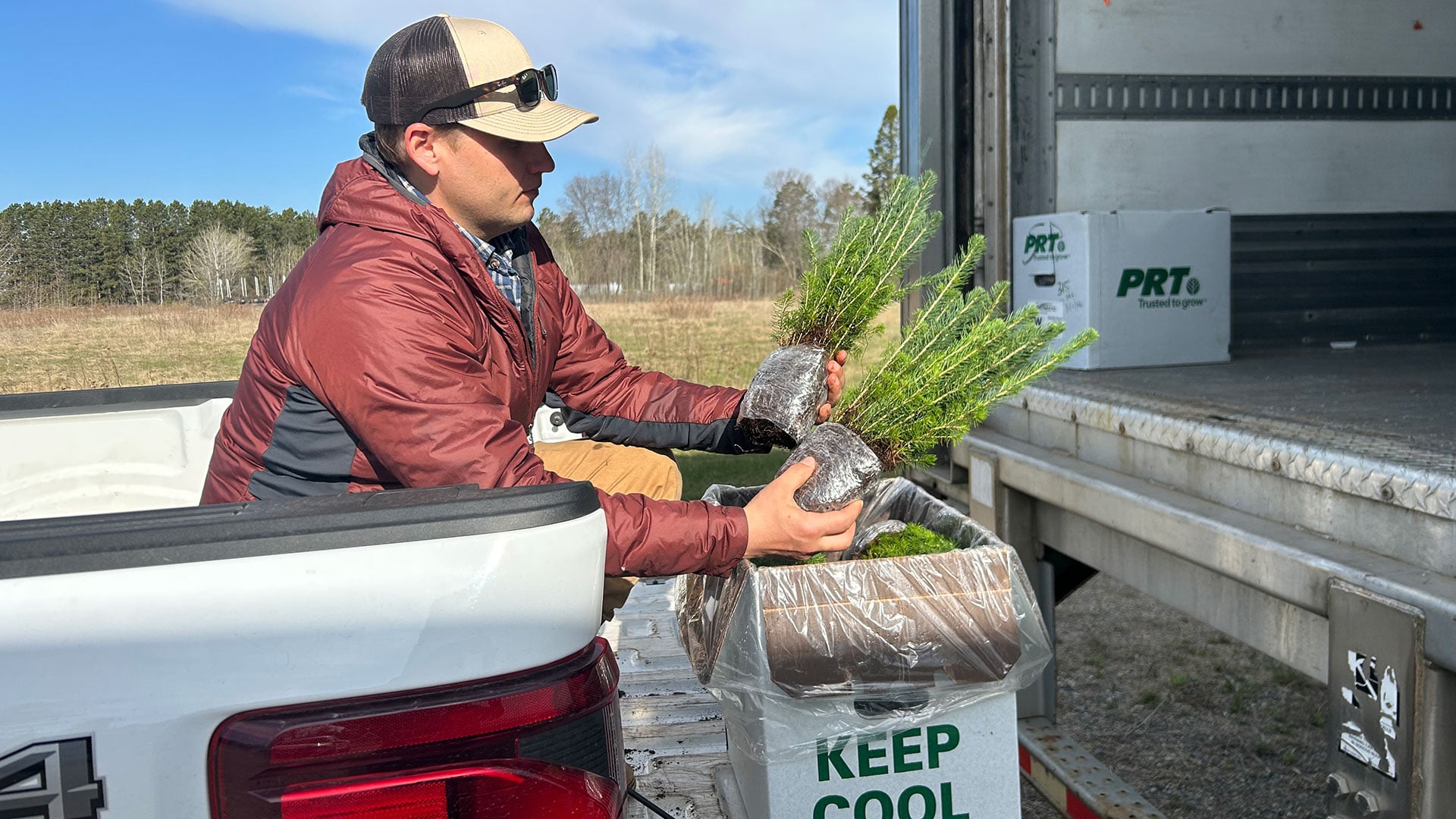
“Annually we plant 20,000 to 30,000 white pine seedlings. White pine is one of our native tree species that is projected to be well adapted to a warmer and drier climate. We are promoting and restoring white pine on our lands to promote biodiversity, and to add additional diversity and resilience to the forest,” says Scherer. 


Sawyer Scherer, UPM Blandin Land and Silviculture Manager, unloading tree seedlings


Another action is developing mixed-wood forests. Each year, several hundred hectares of ‘mixed wood’ forests are developed at Blandin by intentionally establishing diverse mixtures of tree species, such as aspen, spruce, fir, and pine. These restored stands have greater compositional and structural diversity, making them more resilient to climate change and other future stressors.

Another important strategy is pre-commercial tending. At Blandin, crews implement pre-commercial tending in aspen stands to enhance the climate resilience of these forests. Through thinning, the trees become more resistant to drought, which supports vigorous growth in environments that may become warmer and drier.

“During these treatments, our teams also focus on retaining and encouraging the growth of species projected to thrive under future climate conditions, such as red oak, bur oak, maple, and white pine,” Scherer explains.

By maintaining seed sources, foresters regularly retain tree species such as red oak and white pine during timber harvest operations, ensuring that future-adapted trees remain on site. 

Strengthening biodiversity is equally essential. Ecological research links species-rich forests to greater resilience under climate stress. At UPM Blandin, biodiversity progress is tracked through six indicators across forest management, conservation, and research collaboration.


Biodiversity in action

In 2025, UPM conducted its first deadwood inventory on its Minnesota forestland with an external partner, establishing a baseline for deadwood volumes across tree species, diameters, and decay stages. Deadwood is a key indicator of forest health, providing habitat for insects, fungi, and birds. 


Monitoring, certification, and accountability 

UPM Blandin tracks forest ecosystem health through dedicated monitoring systems. This provides verifiable sustainability data and supports regulatory compliance.

“We monitor progress against our biodiversity targets with specific key performance indicators. We are certified under SFI, which allows us to meet diverse market demands, enhance credibility through independent verification, and demonstrate our commitment to sustainable forestry,” concludes Scherer. 


 Forest certification at UPM Blandin

SFI (Sustainable Forestry Initiative) certification must meet the following criteria: zero deforestation, biodiversity protection, protection of soil and water resources, and climate resilience. Forest management practices help mitigate climate change impacts.

PEFC (Programme for the Endorsement of Forest Certification) defines products as sustainable if they adhere to legal and ethical sourcing, biodiversity conservation, chemical restrictions, social responsibility and full supply chain coverage. PEFC endorses SFI as a credible certification scheme. 


Solution to recycling paper machine clothing
Story | 5 min

Minnesota forest committee projects protect endangered species and increase cultural awareness
Story | 4 min

Blandin Employees for Life annual golf fundraiser breaks record
Story | 2 min

;